Back
Back
Palbits
Transforming Game Controllers into Evolving Physical Companions
Role
Product Designer
Team
MDes, 3 Designers
Timeline
Spring 2025
Skills
UX Research, Interaction Design, Fusion 360, Rapid Prototyping
Impact
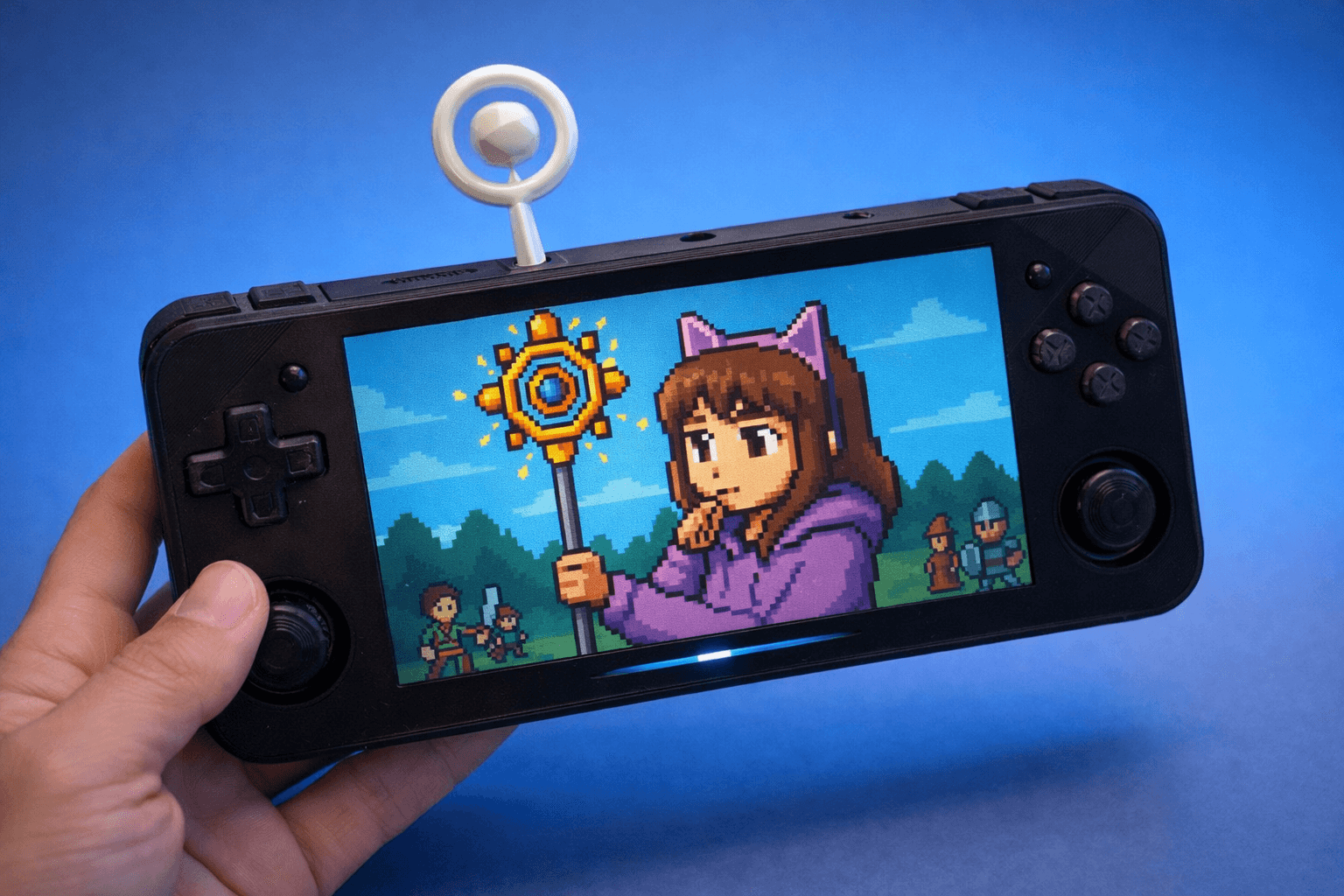
PalBits turns the controller into a living companion. By using physical "Palbits" (insertable, collectible add-ons), we transformed the abstract concept of "leveling up" into a tactile, social experience.
Through research, prototyping, and iteration, our team explored how accomplishment can be a core driver of fun. The final design invites children to physically and emotionally grow alongside their in-game avatar, creating a deeper sense of attachment, agency, and pride.

Challenge
Most game controllers are static tools; for children, they lack the emotional resonance of the worlds they navigate.
What if we could design a controller that “evolved” with its players?
How might we define what “fun” means to gamers and translate that insight into the design of a new game controller?
Process
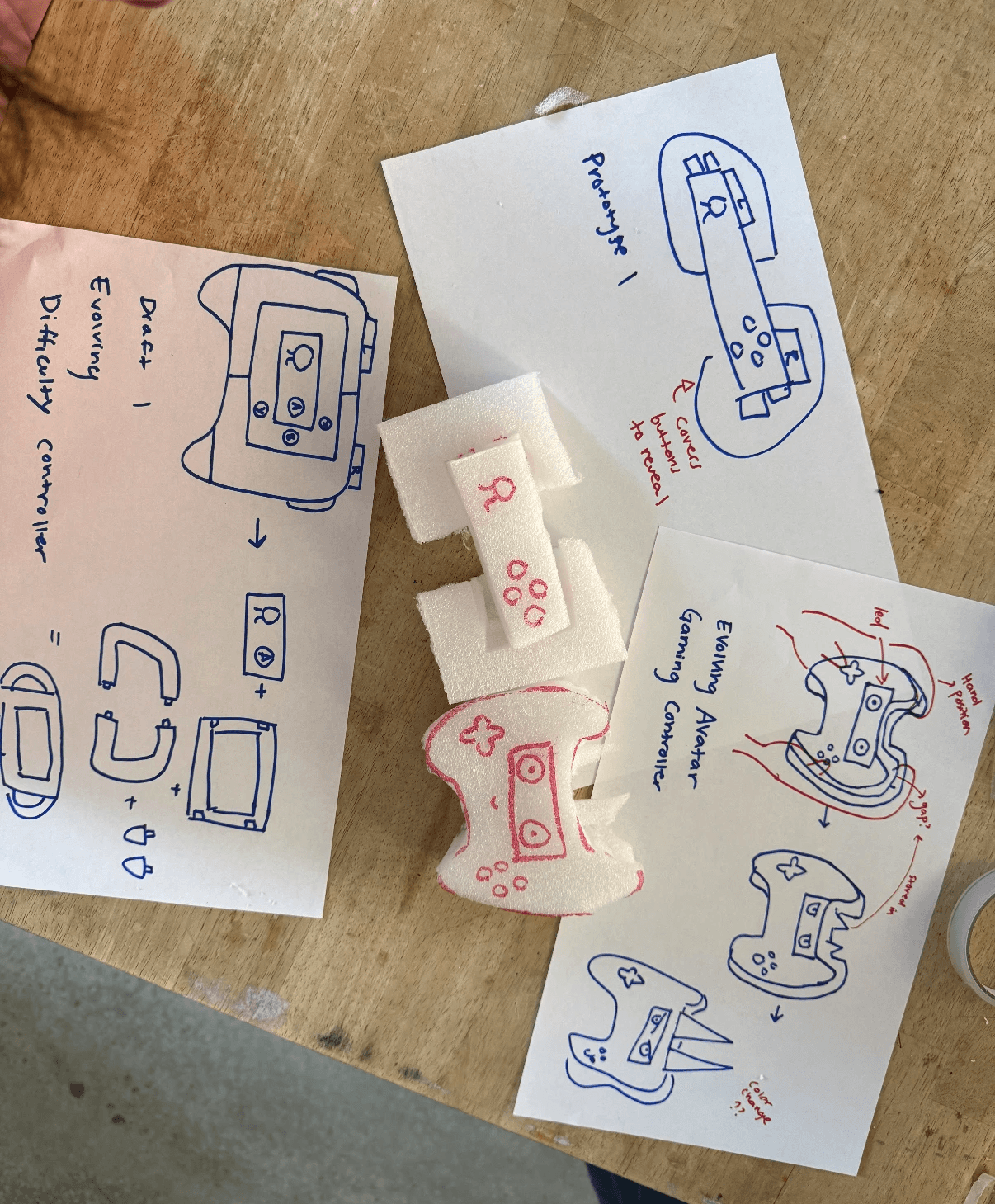
We started with a broad prompt: Design a unique controller that embodies "fun." Initial research showed that for our target audience, "fun" was synonymous with Accomplishment. However, our first prototype—a "take-apart" modular controller—was frustrating rather than enjoyable. It lacked an initial emotional hook.
Initial Concepts
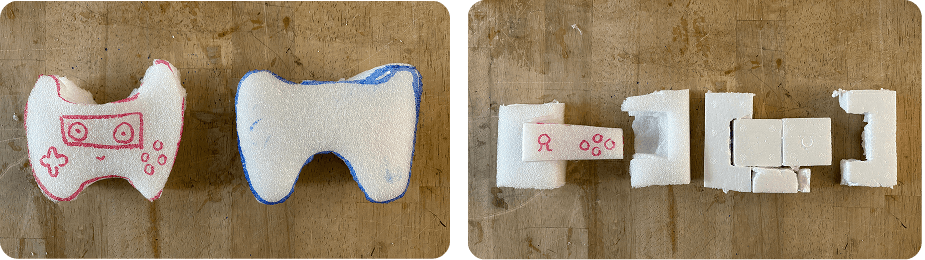
Concept 1: As players “leveled up”, the controller would “evolve” along side them by revealing more cosmetic parts, such as horns.
Users found this version “fun” but not accomplishing
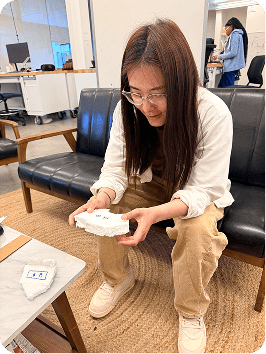
Users found avatar form enjoyable but were concerned about the comfort and ergonomics of the shape
This was due to the lack of initial emotional connection, potentially due the format of the interview or console introduction
Concept 2: A controller that physically changed shape to increase difficulty as players leveled up, producing a final trophy with the removed parts.
Users found this version “fun” and accomplishing
Users found the form non-intuitive and did not understand that the difficulty was meant to be increasing on first use.
Users found the controller experience more frustrating than enjoyable
From the user research, we decided to pivot concepts.
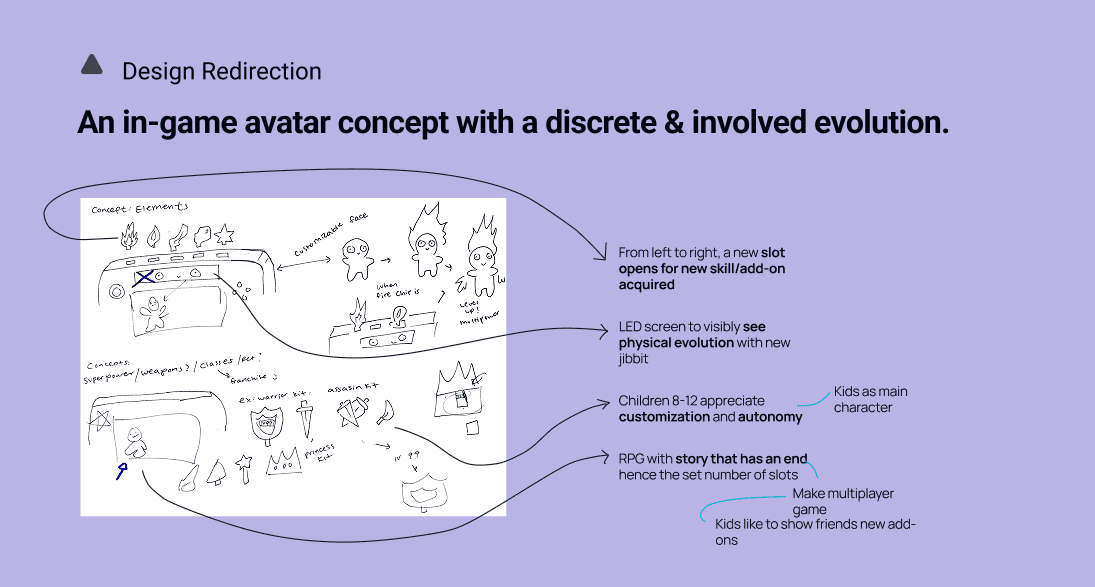
Players wanted both emotional connection AND visible progress. While both prototypes had merit, neither successfully combined accomplishment with enjoyable interaction. We needed to merge the emotional appeal of avatar evolution with intuitive, satisfying physical interactions. This realization drove our design pivot.
Based on prototype feedback and deeper research into child development psychology, we realized our product would be more successful in a younger market due to the popularity of “cuteness” and “personalization”. Thus, we shifted our focus to children aged 8–12, with stronger needs for customization and autonomy.
Outcome
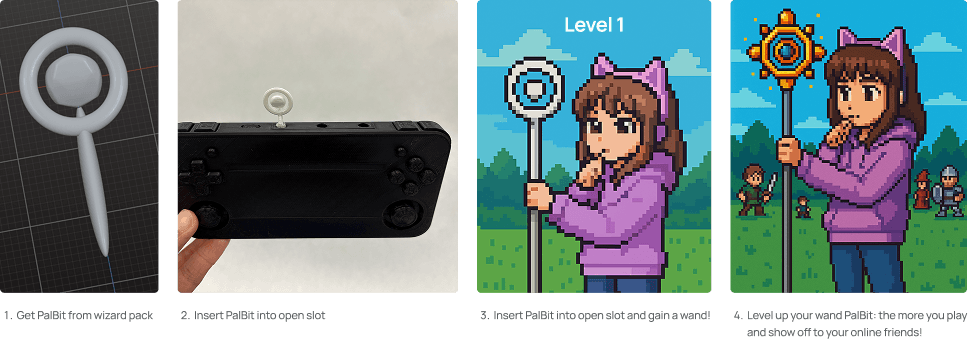
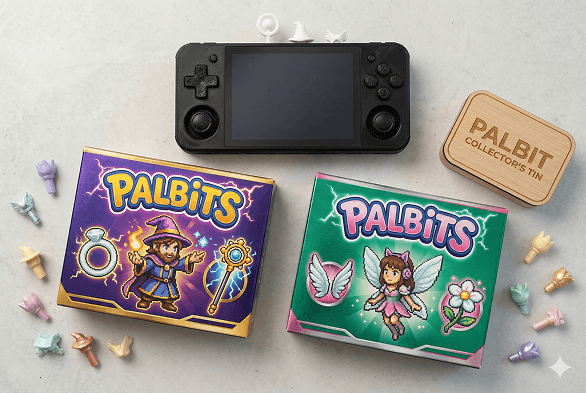
Palbits is a series of personalizable, insertable ability bits that power up as players level up in game.
Key points in our final design include:
Discrete Evolution: Clear, defined progression points prevent overwhelm and make achievement feel concrete rather than abstract.
Physical + Digital: Combining tangible bits with digital progression creates stronger emotional connections to gameplay accomplishments. Progress becomes tangible!
Identity + Self-Confidence: Customization allows players to shape their own adventure and to feel un-restricted in coming up with ways to problem solve, creating a stronger sense of ownership and accomplishment.
Social Sharing: Because the upgrades are visible, players can easily show their progress to friends, reinforcing the social dimension of gaming.
Reflection
Don't be afraid of failure!
Both initial prototypes were well received, but had their shortcomings so neither were the ideal solution. We also failed a lot during the physical prototyping due to the finicky nature of 3D printing, but I really got to know the ins and out of the software by the end.
We started designing for 18-28 year-olds because that's who we interviewed and were most comfortable designer for as students. But our concept of an "evolving controller" kept feeling forced for that demographic. When we researched child development psychology, everything clicked—kids ages 8-12 naturally crave customization, autonomy, and social validation. The lesson: your initial user research might reveal the insight, but not always the right audience for your solution.
This project challenged me to think critically about how abstract emotions like “fun” can be translated into design decisions.
One of the most important lessons was the value of research in reframing design problems. What began as a broad exploration of enjoyment ultimately became a focused investigation into accomplishment and progress.
I really enjoyed working on a project revolving around what I love: gaming and their peripherals. Thank you so much to Professor Ahmed Riaz from Logitech for the guidance!
Back
Palbits
Transforming Game Controllers into Evolving Physical Companions
Role
Product Designer
Team
MDes, 3 Designers
Timeline
Spring 2025
Skills
UX Research, Interaction Design, Fusion 360, Rapid Prototyping
Impact
PalBits turns the controller into a living companion. By using physical "Palbits" (insertable, collectible add-ons), we transformed the abstract concept of "leveling up" into a tactile, social experience.
Through research, prototyping, and iteration, our team explored how accomplishment can be a core driver of fun. The final design invites children to physically and emotionally grow alongside their in-game avatar, creating a deeper sense of attachment, agency, and pride.
Challenge
Most game controllers are static tools; for children, they lack the emotional resonance of the worlds they navigate.
What if we could design a controller that “evolved” with its players?
How might we define what “fun” means to gamers and translate that insight into the design of a new game controller?
Process
We started with a broad prompt: Design a unique controller that embodies "fun." Initial research showed that for our target audience, "fun" was synonymous with Accomplishment. However, our first prototype—a "take-apart" modular controller—was frustrating rather than enjoyable. It lacked an initial emotional hook.
Initial Concepts
Concept 1: As players “leveled up”, the controller would “evolve” along side them by revealing more cosmetic parts, such as horns.
Users found this version “fun” but not accomplishing
Users found avatar form enjoyable but were concerned about the comfort and ergonomics of the shape
This was due to the lack of initial emotional connection, potentially due the format of the interview or console introduction
Concept 2: A controller that physically changed shape to increase difficulty as players leveled up, producing a final trophy with the removed parts.
Users found this version “fun” and accomplishing
Users found the form non-intuitive and did not understand that the difficulty was meant to be increasing on first use.
Users found the controller experience more frustrating than enjoyable
From the user research, we decided to pivot concepts.
Players wanted both emotional connection AND visible progress. While both prototypes had merit, neither successfully combined accomplishment with enjoyable interaction. We needed to merge the emotional appeal of avatar evolution with intuitive, satisfying physical interactions. This realization drove our design pivot.
Based on prototype feedback and deeper research into child development psychology, we realized our product would be more successful in a younger market due to the popularity of “cuteness” and “personalization”. Thus, we shifted our focus to children aged 8–12, with stronger needs for customization and autonomy.
Outcome
Palbits is a series of personalizable, insertable ability bits that power up as players level up in game.
Key points in our final design include:
Discrete Evolution: Clear, defined progression points prevent overwhelm and make achievement feel concrete rather than abstract.
Physical + Digital: Combining tangible bits with digital progression creates stronger emotional connections to gameplay accomplishments. Progress becomes tangible!
Identity + Self-Confidence: Customization allows players to shape their own adventure and to feel un-restricted in coming up with ways to problem solve, creating a stronger sense of ownership and accomplishment.
Social Sharing: Because the upgrades are visible, players can easily show their progress to friends, reinforcing the social dimension of gaming.
Reflection
Don't be afraid of failure!
Both initial prototypes were well received, but had their shortcomings so neither were the ideal solution. We also failed a lot during the physical prototyping due to the finicky nature of 3D printing, but I really got to know the ins and out of the software by the end.
We started designing for 18-28 year-olds because that's who we interviewed and were most comfortable designer for as students. But our concept of an "evolving controller" kept feeling forced for that demographic. When we researched child development psychology, everything clicked—kids ages 8-12 naturally crave customization, autonomy, and social validation. The lesson: your initial user research might reveal the insight, but not always the right audience for your solution.
This project challenged me to think critically about how abstract emotions like “fun” can be translated into design decisions.
One of the most important lessons was the value of research in reframing design problems. What began as a broad exploration of enjoyment ultimately became a focused investigation into accomplishment and progress.
I really enjoyed working on a project revolving around what I love: gaming and their peripherals. Thank you so much to Professor Ahmed Riaz from Logitech for the guidance!